Aquatics Envirothon Study Materials
Aquatics Study Areas
Water Budget • Local Water Budgets • The Hydrologic Cycle • The Water Molecule • Watersheds & Delineation • Competing Uses of Water • Water Pollution • Wetlands • Pond/Lake Ecosystems • Riparian Areas • Laws Protecting Water • Stream Assessment • Acid Rain • Drinking Water • Stream Order • Source Water • Aquatic Invertebrates • Stormwater • Water Math • Aquifers • Aquatics Sample Test
Riparian Areas and Buffers
Riparian areas are lands adjacent to creeks, streams, and rivers where vegetation is strongly influenced by the presence of water. Excluded are such sites as ephemeral streams or washes that do not exhibit the presence of vegetation dependent upon free water in the soil. Riparian areas may constitute less than 1 percent of the land area in the western part of the United States, but they are among the most productive and valuable of all lands. The natural vegetation stretching along a stream or river is called the riparian buffer. Many states allow timber harvesting in riparian buffers if the harvesting is consistent with land use designation or management objectives and it is done properly with Best Management Practices.
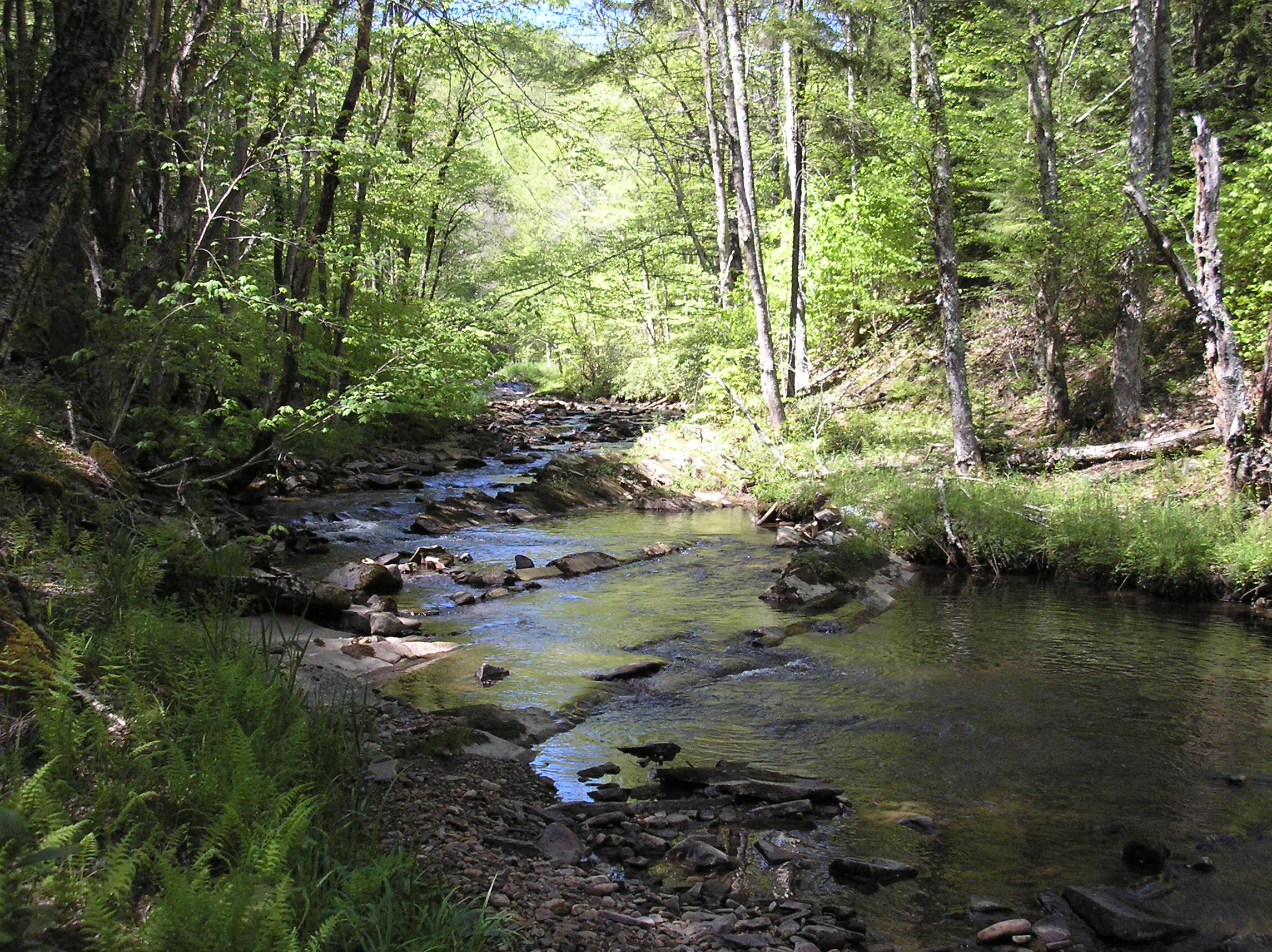
- Buffers trap sediment from road runoff and other soil disturbances within the harvest area.
- Buffers will continue to provide a source of large wood and detritus for stream functions and aquatic macroinveterbrates.
- Buffers provide leaf food for aquatic life.
- Buffers provide shade, keeping temperatures from becoming too high for aquatic life.
- Buffers filter water
- Buffers provide habitat for both aquatic and terrestrial wildlife.
- Buffers take up nutrients and store these in leaves, limbs, and roots instead of allowing them to reach streams in large pulses, which overload the system.
From WVDEP on Riparian Buffers
(Source: https://dep.wv.gov/WWE/getinvolved/sos/Pages/RiparianMagic.aspx)
Importance of Riparian Buffers
Riparian buffers are the natural vegetation from the edge of the stream bank out through the riparian zone. The vegetative zone serves as a buffer to pollutants entering a stream from runoff, controls erosion, and provides habitat and nutrient input into the stream. A relatively undisturbed riparian zone supports a robust stream system; narrow riparian zones occur when roads, parking lots, fields, lawns, bare soil, rocks, or buildings are near the stream bank. Residential developments, urban centers, golf courses, and rangeland are the common causes of anthropogenic degradation of the riparian zone.
Riparian buffers are the most valuable protection a stream system has against outside influences. In most cases healthy riparian directly reflects upon the condition of the stream unless the source of the insult is a specific pollutant. Enhancement of the riparian buffer by re-planting native grasses, forbs, shrubs and trees is the first step in the recovery of the stream back to a more natural condition. Some of the many benefits of a healthy riparian buffer are listed below. Can you think of more?
- Provides organic material as food for invertebrate, fish and wildlife
- Supplies large and small pieces of woody debris that provide habitat for fish, invertebrates and amphibians
- Alters how sunlight reaches the stream and is an important temperature moderatorv
- Stabilizes stream banks and reduces erosion
- Filters sediment and materials from overland runoff and roots of many plants traps and holds the sediments
- Absorbs nutrients from overland and sub-surface flows
- Reduces the impacts of flooding through temporary storage, interception and slow releases from heavy rains